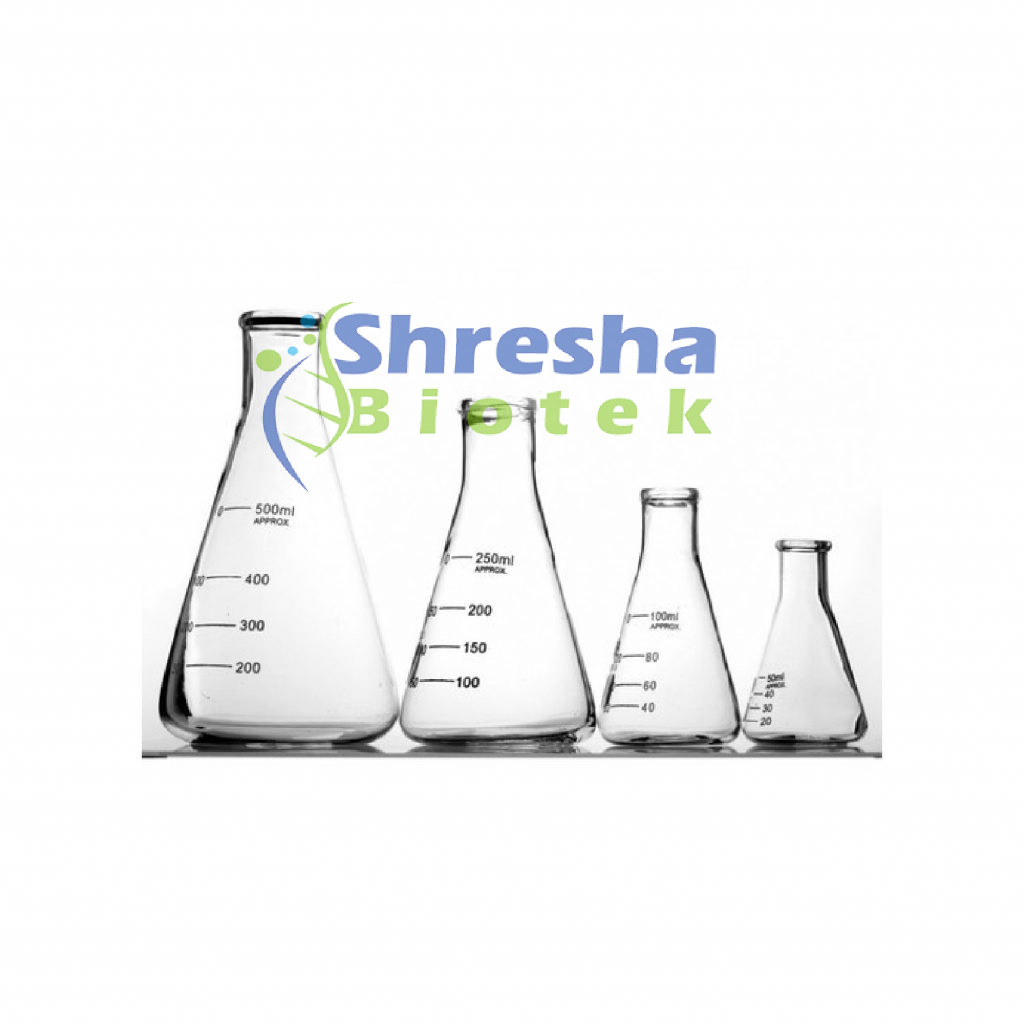
Features:
Tapered conical shape for easy swirling and mixing without spilling
Narrow neck to support rubber stoppers or screw caps
Graduation markings for approximate volume measurements
Flat base for stable placement on lab surfaces and heating elements
Made to resist heat and chemical reactions (glass versions)
Suitable for heating, cooling, or storing solutions
Reusable and autoclavable (glass flasks)
Available in various sizes to suit different lab needs
Specifications:
Material: Borosilicate glass or polypropylene plastic
Capacity: Common volumes include 50 mL, 100 mL, 250 mL, 500 mL, 1000 mL.
Neck: Narrow mouth, sometimes with ground glass joint or screw thread
Graduations: Etched or printed, not for precise measurement
Heat resistance: Up to ~500°C for borosilicate glass
Sterilization: Autoclavable; plastic types usually withstand up to ~120°C
Compliance: May follow ISO or ASTM standards depending on manufacturer
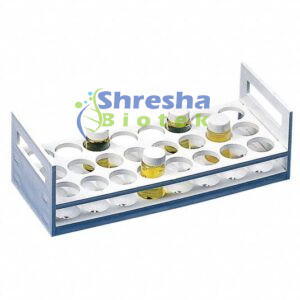
Specifications:
Material: Polypropylene, high-density polyethylene (HDPE), or wire-coated metal
Capacity: typically 20, 40, or 60 vials (varied based on model)
Vial diameter compatibility: approx. 16 mm to 28 mm
Rack dimensions: approx. 200–350 mm length, 80–150 mm width, 30–100 mm height
Temperature range: -20°C to 100°C

Specifications:
Material: Polypropylene or polyethylene
Diameter: 11–14 mm (varied based on vial cap size)
Color options: often sets of 5–10 colors (e.g., red, blue, green, yellow, white, etc.)
Temperature range: -80°C to 121°C
Compatibility: fits external or internal thread cryo vials (varied by model)
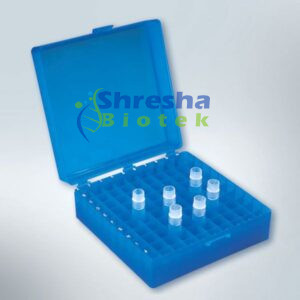
Specifications:
Material: Polypropylene (PP)
Capacity: 25, 81, or 100 cryo vials
Compatibility: 1.0 mL to 5.0 mL cryo vials
Dimensions: 133 mm × 133 mm × 52 mm (for 100-place box)
Grid layout: 5×5, 9×9, or 10×10 configuration
Temperature range: -90°C to 121°C
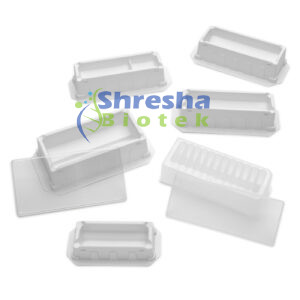
Specifications:
Material: Polystyrene, polypropylene, or polyethylene
Capacity: 25 mL, 50 mL, 100 mL, or 150 mL
Bottom type: flat, V-bottom, or sloped
Compatibility: suitable for manual or automated liquid handling systems
Temperature resistance: up to 121°C (for polypropylene, autoclavable)
Sterilization method (for sterile versions): gamma irradiation or ethylene oxide
©2025-26. All Rights Reserved. Shresha Biortek PVT LTD