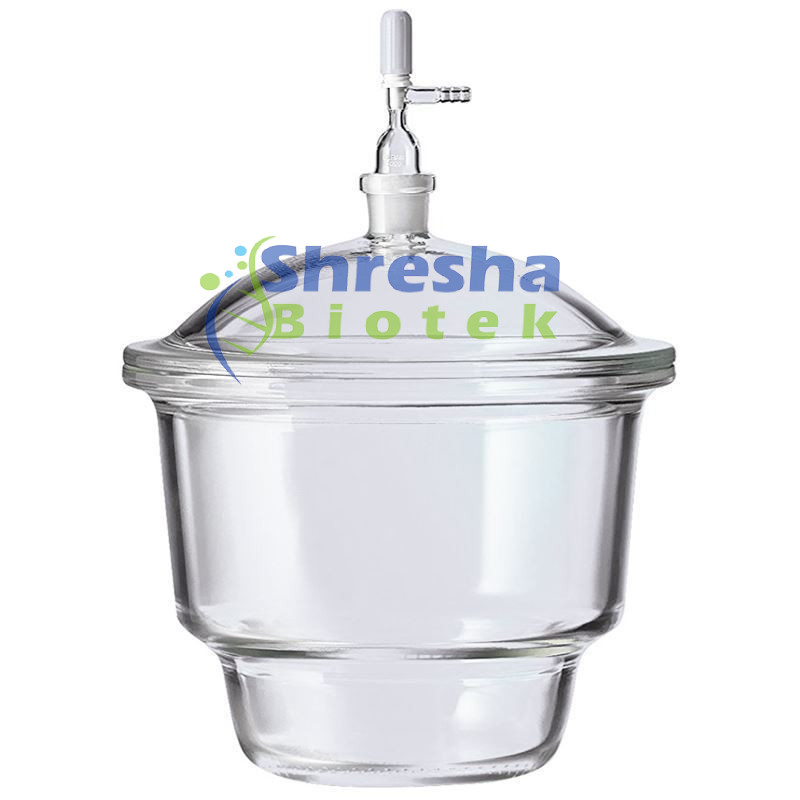
Features:
Airtight container used to keep substances dry
Fitted with a lid that seals tightly to prevent moisture entry
Contains a compartment for desiccants like silica gel or anhydrous calcium chloride
Used to store moisture-sensitive materials or cool hot crucibles in a moisture-free environment
Maintains a low-humidity atmosphere inside
Common in labs handling hygroscopic chemicals or samples requiring dry storage
Transparent or opaque lid for visibility or light protection
Available in vacuum and non-vacuum types
Specifications:
Material: Borosilicate glass, polypropylene, or polycarbonate
Shape: Circular base with flanged rim and dome-shaped lid
Seal: Greased glass flange or rubber gasket for airtight seal
Desiccant chamber: Space at the bottom for drying agents
Sizes: Vary based on internal diameter (commonly 100 mm, 150 mm, 200 mm, etc.)
Lid type: Plain for standard use or with stopcock for vacuum applications
Vacuum compatibility: Vacuum desiccators withstand reduced pressure using stopcocks and reinforced construction
Temperature resistance: High for glass; moderate for plastic
Sterilization: Glass types are autoclavable; plastic types depend on material

Specifications:
Volume: typically 0.5 mL to 50 mL
Material: Polypropylene or polyethylene
Cap type: Screw cap with or without O-ring, snap cap, or plug seal
Temperature range: -80°C to 121°C
Dimensions: varies by volume (e.g., 1.5 mL vial approx. 11 mm diameter × 45 mm height)
Graduation interval: varies, commonly every 0.1 mL or 0.5 mL
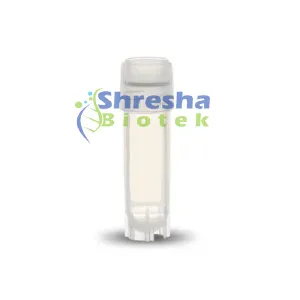
Specifications:
Volume: typically 1.0 mL, 1.5 mL, 2.0 mL, 4.0 mL, or 5.0 mL
Material: Medical-grade polypropylene
Temperature range: down to -196°C (in vapor phase liquid nitrogen)
Cap type: External or internal thread with O-ring seal
Dimensions: varies by volume; e.g., 2.0 mL vial ~12.5 mm diameter × 48 mm height
Max RCF: up to 17,000 x g (varied by model)

Specifications:
Material: Polypropylene or polyethylene
Diameter: 11–14 mm (varied based on vial cap size)
Color options: often sets of 5–10 colors (e.g., red, blue, green, yellow, white, etc.)
Temperature range: -80°C to 121°C
Compatibility: fits external or internal thread cryo vials (varied by model)
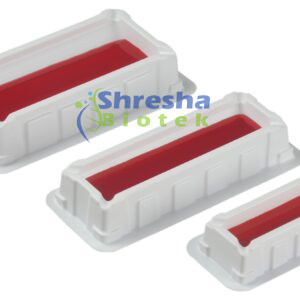
Specifications:
Material: Polypropylene or polystyrene
Capacity: 25 mL, 50 mL, 100 mL, or more
Bottom type: V-bottom or sloped
Dimensions: compatible with ANSI/SLAS plate formats (for automation)
Sterilization (for sterile versions): gamma irradiation or ethylene oxide
Temperature resistance: up to 121°C (autoclavable if polypropylene)
Features: may include lid, anti-drip spouts, and non-pyrogenic options
Welcome Back 👋
Sign in to access your account and continue where you left off.
Welcome aboard 🚀
Create your account to access everything you need.
Added to cart
Check out our shop to see what's available